Transformation is the one constant every organization is wrestling with, and most are doing it with tired teams, shifting priorities, and a nagging sense that the finish line keeps moving. So what actually keeps people energized through the grind?
According to Gallup’s 2025 Global Leadership Report, the answer is hope. When researchers asked people in 52 countries which leadership quality had the greatest positive influence on their lives, they ranked hope well above trust, compassion, and stability.
And it’s what followers say they need most from the leaders of their organizations.
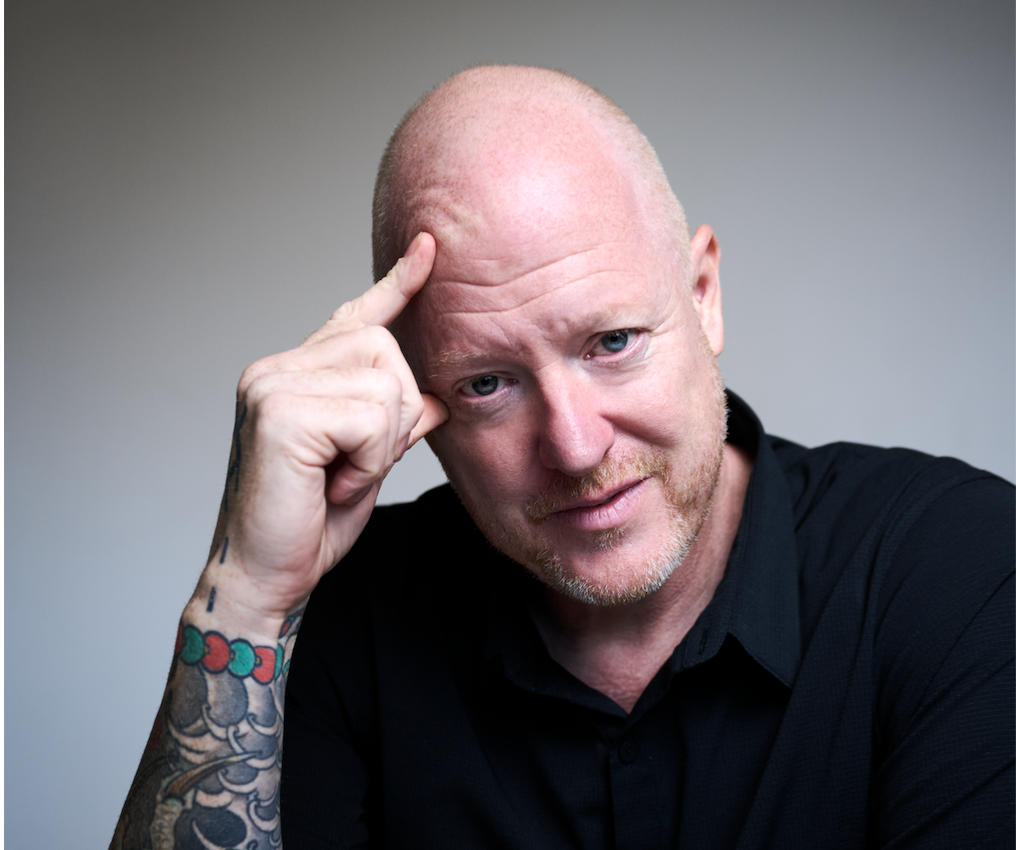
In this piece, futurist and keynote speaker Nikolas Badminton explores hope not as a soft sentiment but as a practical, buildable capability: one that fuels motivation, resilience, and change. He introduces the idea of “the messy middle,” the space between big-picture future planning and real-world delivery, and shares practices leaders can use to become “hope engineers” who transform how they transform.
Level up your leadership and transform how you transform
By Nikolas Badminton
Gallup’s 2025 Global Leadership Report asked people across 52 countries to name the leader
with the most positive influence on their life, then describe what that person gives them. Hope
dominated the responses well ahead of trust, and far beyond compassion and stability. Hope is
also in demand from the team, with most followers saying they need hope from the leaders of
their organization.
Hope is emerging as a practical way to build individual and team energy for motivation,
resilience and change and as a vital part of how organizations deliver on their promise for better
futures. It’s also been proven to be a practical way to build individual and team energy for
motivation, resilience and change and as a vital part of how organizations succeed.
We can see hope as a capability that can be built, that we create the conditions from which
hopeful futures emerge. That makes us hope engineers – those who explore futures to prime the
goals, actions and agency-driven pathways.
This is how to transform how we transform.
Navigating the ‘messy middle’
After all the future work is done, we still find ourselves in the world today facing the daunting task
of transformation.
It’s a place I call ‘the messy middle’. The solutions that rely on people, process, data (and AI),
technology and governance are constantly challenged, failing and being reinvented in real time.
We search for solutions, iterations and ad hoc actions daily where we focus on progress and
delivery. It’s apt because we are humans, exist in the mess, and constantly find a way out and
over it to a new way of working.
That’s why hope as an energy for change is so vital.
Transforming how we transform
Here are four practices that you can follow to build a high-hope, futures-aware mindset and a
team that drives forward with motivation, resilience, and delivery excellence.
Step 1: Set audacious goals
Strategy presents objectives, actions, and the risk landscape and sets financial targets. However, we’re often left with risk as the opening frame, and that makes people distance themselves from the strategy they’re meant to own. Risk still gets managed. It just shouldn’t be the thing that organizes and guides our thinking and planning.
Unfortunately, most corporate goals are not, and nobody stays focused when a small impact is at stake.
We can embrace strategic foresight to help us look beyond the risk and consider what is probable and what is preferable based on our goal. That allows us to work backwards from the futures we imagine. That requires a defined future destination described in sufficient detail with guiding signals, trends, and questions that are specific enough to organize our work around and meaningful enough to be worth the trouble.
The question a leader asks determines the posture of the room, so having clarity with a view to significant impact is important. “We don’t know what is going to happen?” produces anxiety, futures theater, and deference to whoever sounds most confident that everything is going to be OK. “What might happen, and what would we do about it?” produces options and shared ownership of the exploration needed.
You need to keep an open eye for new and exciting opportunities then track one or two signals of change each week. It trains you to start with a destination, not the risk
Step 2: Explore multiple pathways
Hope is diminished the moment people believe there is only one way through and forward. A single pathway forward turns every obstacle into an existential event and every change of course into an admission that we have failed to deliver.
Charles R. Snyder’s research on high-hope individuals—and subsequent findings—found that leaders with hope generate alternate routes quickly and treat blockers as terrain rather than verdicts. Resilient organizations think in pathways while brittle ones defend a plan. One plan creates dependency. Multiple pathways create agency so design three ways forward, not one.
It’s crucial to build the alternates before you need them. Not a contingency paragraph in an email or deck, but pathways with owners and actions and dependencies stated clearly so the team knows what happens if the way forward hits a chokepoint or closes.
Step 3: Build agency in the team
Hope requires the belief that the work, and the people doing it, matter to the organization. Most organizations remove belief by accident, through layered approvals, permanent restructuring and transformation programs designed at the top and dictated to everybody else.
Agency is not a feeling you install through communications and a monthly team meeting. It’s a structural property of where decisions sit, and of whether people have explicit permission to shape, question and remix the work in front of them. I’m reminded of this in the work I do.
A couple of years ago I worked with the leadership team of a large European agriculture and food supply business. We explored signals and emerging trends and integrated key elements of foresight into the C-Suite’s monthly briefing. It was in one of those briefings when the CEO stopped me mid-sentence. I was taking them through a section on climate disruption to Southern European growing seasons, especially in Spain and Italy. The company was two weeks away from investing millions in a partnership in a fruit growing operation in southern Spain.
She asked what we would do differently if warming and hotter summers with unknown effects of drought and wildfires were to become more normal occurrences.
Over the next three days—the only window we had to do the work with the right people in the room—we built scenarios, a risk profile and a register, and came back with recommendations to restructure the partnership investment. The deal went ahead at a different scale and on more flexible terms. It’s still proven to be flexible and resilient today, considering how things are unfolding now.
That is an agency win, not a foresight one. The signal had been circulating in the briefing pack for some weeks. What changed that day wasn’t the quality of the insight—it was that the one person who could redirect the money happened to be in the room when it was considered. Send that same briefing to a regional team, or a strategy function, or anyone who would have needed to write a memo upwards, and the investment—with the unchecked risk—would have closed on schedule with effects on profitability, the partnership and the bottom line.
High-hope leaders become architects of agency and move the decision closer to the work. They set decision rights, budget, and explicit permission that it is fine to try and be wrong at the place they are most needed—where the work is. They hold fast on the destination and let go of the route.
Step 4: Make experiments mandatory
Certainty is a consequence of movement rather than a prerequisite for it and high-hope organizations do not wait for certainty before acting. This is the mechanism that makes hope self-reinforcing. Movement forward creates evidence and that creates confidence. These builds hope as an energy for change in your organization because people believe their actions matter and that proves agency is working.
This is an argument against pure-play 18-month transformation programs and for a portfolio of small, funded and time-boxed experiments. The fact is that 10 experiments at a fraction of the cost will tell you more about what’s coming than a single strategy document, and it distributes agency across 10 teams instead of concentrating it in a steering committee.
Starting the work today
The job is to design the conditions in which people can see a future worth pursuing, credible pathways toward it, and evidence that what they do changes outcomes.
None of this is about making people feel better. That’s a useful by-product, not the goal. Hope is a capacity to act, and the four practices are how you audit that. They set you up to build a hopeful organization and a mindset for motivation and resiliency where transformation is needed.
To mobilize this thinking—and to check that you have a high-hope organization—you have a hopeful mindset checklist:
- Are we thinking about big goals? Stop five people at random and ask where the organization is going in 10 years. Count how many give you the same answer.
- Have we considered multiple pathways? When a route closes, how many days pass before the team is moving on to another one? If you’re answering in quarters, you had a plan, not pathways.
- Is team-wide agency supported and encouraged? Ask five people at the delivery layer to name a decision they made in the last 90 days that stuck. Count the answers, not the enthusiasm.
- Are we executing with an experimental mindset? Ask how many experiments are running, and how many you killed. If nothing has been killed this year, they aren’t experiments. They’re projects with better branding.
Here’s a reminder that building hope is also a personal discipline, and it starts with reflection. Begin tomorrow with one sentence, “Today, we are working towards a future where…” along with your goal-driven proclamation. You must finish it out loud, in front of the people who must deliver transformation. You’ll find out quickly whether you can, and whether they believe that a clear goal and agency-driven pathways exist and that we have hope as an energy for change.
FAQ
Who is Nikolas Badminton?
Nikolas Badminton is a world-renowned futurist, author, and keynote speaker. He helps leaders anticipate disruption, navigate uncertainty, and build future-ready cultures. Nikolas serves as Chief Futurist at the Futurist Think Tank. He has also advised and spoken for leading global brands, governments, and institutions.
What does “hope” have to do with leadership and transformation?
Gallup’s 2025 Global Leadership Report identifies hope as the quality people most want from leaders. However, hope goes beyond wishful thinking. Leaders build it by setting clear goals, giving teams a sense of agency, and creating realistic paths forward. These actions strengthen motivation, resilience, and performance during change.
What is “the messy middle”?
Nikolas calls this space between planning the future and making it happen “the messy middle.” During this time, teams test ideas, face challenges, and adapt their strategies. People, processes, AI, and technology are constantly evolving. As a result, his work helps leaders keep teams motivated and moving forward through uncertainty.
What can audiences expect from a Nikolas Badminton keynote?
Nikolas explores the trends shaping work, technology, AI, and society. In addition, his research-backed talks offer practical takeaways tailored to each audience. As a result, attendees leave with ideas they can apply right away.
Which topics does Nikolas speak on?
>>>>>Topics include the future of work, leadership and hope, AI and emerging technology, resilience and change, foresight and futures thinking, and organizational transformation. Sessions can be customized to your industry and goals.
What types of events is he suited for?
Nikolas speaks at conferences, leadership summits, and corporate offsites. He also presents at association events and executive retreats, both in person and virtually.
Can Nikolas customize his keynote for my organization?
Yes. Nikolas adapts each talk to your industry, audience, and goals. He addresses the specific challenges your team faces.
How do I book Nikolas Badminton for my event?
Contact Eagles Talent using the details below. The team will help with availability, fees, and customizing the session to your needs.
Ready to build a high-hope, future-ready team?
Bring Nikolas Badminton’s insight and energy to your next conference, leadership summit, or corporate event. Help your people navigate the messy middle with motivation, resilience, and a clear sense of what’s possible.
Book Nikolas Badminton through Eagles Talent today. Their team can check availability, discuss your goals, and tailor a keynote that transforms how your organization operates.
The needs for this subject can really vary, so connect with one of our members to determine the best message.
Email us at or call us at 1-973-313-9800.