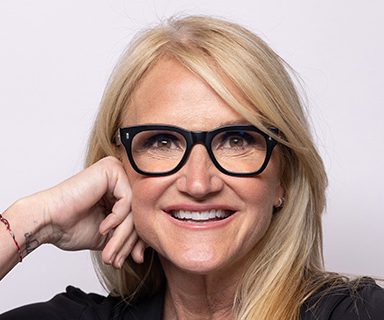
From Kitchen Table Mel Robbins
How a waitress with dyslexia became the most booked female speaker on the planet by keeping it simple, honest, and unforgettably human
Mel Robbins stood behind the counter of yet another restaurant, order pad in hand, watching customers come and go with their own stories, their own struggles, their own dreams deferred. She had no idea that this moment—serving coffee and taking orders—was actually her first masterclass in human psychology, relationship building, and the art of making people feel seen.
Fast forward to 2025, and this motivational speaker commands audiences of 32 million followers across all platforms, has become the most booked female speaker in the world, and just closed a multi-million dollar, three-year deal with SiriusXM. Her latest book sold 6 million copies in six months and is on pace to achieve the best non-fiction launch in publishing history.
But here’s what makes Leadership Speaker Mel Robbins’ empire different from every other personal development brand: she never forgot the kitchen table.
“I reach millions of people every week, but the mission hasn’t changed much: to help someone who feels hopeless, overwhelmed, or lost and help them take the next right step,” she told Boston College Law Magazine. “Whether it’s on a stage, behind a mic, or at a kitchen table, I’m still doing the work that started at Boston College Law School: standing beside people who need someone in their corner.” The kitchen table metaphor isn’t just poetic—it’s the secret sauce of a business empire that has revolutionized how wisdom scales in the digital age.
The Foundation: Boston College Law School Origins
Before Mel Robbins became a household name, she was Melanie Schneeberger, a kid from North Muskegon, Michigan, who struggled so severely with undiagnosed dyslexia that teachers and classmates labeled her the “dumb kid.” The bullying was relentless, but it did something unexpected: it drove her to develop an almost superhuman ability to read people, understand their pain, and figure out how to help them feel less alone. After graduating from Dartmouth College—a remarkable achievement for someone who’d been written off academically—she earned her J.D. from Boston College Law School in 1994. But this wasn’t just another law degree. This was where Mel Robbins discovered her true calling: standing beside people who needed someone in their corner.
She started as a criminal defense attorney, then moved to the Legal Aid Society in New York City, representing people who couldn’t afford legal help. Later, she became a CNN legal analyst during high-profile cases like the George Zimmerman trial. In each role, the throughline was the same: helping people navigate their worst moments with dignity and hope. “The mission hasn’t changed much,” Robbins reflected years later. What she was learning in courtrooms and legal aid offices was actually the foundation of what would become a global empire: how to take complex, overwhelming problems and break them down into manageable next steps. The legal training taught her something crucial about human psychology: people don’t need to understand every nuance of the law to make good decisions. They need clear, actionable guidance delivered with empathy and confidence. This insight would later become the cornerstone of her entire approach to personal development.
The Breakthrough Moment: The 5 Second Rule
In 2010, Robbins published her debut book, “Stop Saying You’re Fine,” but it was seven years later that she stumbled onto the idea that would change everything: The 5 Second Rule.
The concept emerged from her own struggle with procrastination and self-doubt. She discovered that if you have an impulse to do something that you know you should do, you have exactly five seconds to act on it before your brain kills the impulse with doubt, fear, or overthinking.
5… 4… 3… 2… 1… GO.
Simple? Stupendously so. Effective? The TEDx talk explaining the concept became one of the most popular in history, and the book became the best-selling self-published audiobook ever recorded. But here’s what most people miss about The 5 Second Rule: it wasn’t just a productivity hack. It was a masterclass in how to package sophisticated psychological concepts into tools that anyone could use immediately. The rule is based on solid neuroscience—specifically, research on what psychologists call “implementation intentions” and the brain’s habit of talking us out of anything that feels uncertain or risky. But instead of requiring people to understand the research, Robbins made the tool so simple that you could teach it to a five-year-old. This became her signature approach: take the most complicated, amazing, exquisite research from the best minds on the planet and make it something that any person could share with somebody else at a kitchen table.
The Simplicity Strategy: Why “Obvious” Advice Wins
When Time Magazine labeled Robbins the “queen of stupendously obvious advice,” they meant it as criticism. She took it as the highest compliment.
“I don’t remember something that’s complicated,” she told the New York Times. “Tools only work when you use them. I think complicated solutions are stupid.”
This philosophy flies in the face of an entire industry built on making simple things sound complex to justify high prices and exclusive access. Traditional psychology and self-help often wrap basic concepts in jargon, complicated frameworks, and multi-step programs that require certification courses to understand. Robbins went the opposite direction. She became a translator, taking peer-reviewed research on behavioral change, neuroscience, and positive psychology and distilling it into language that felt like advice from your smartest, most encouraging friend. The neuroscience behind this approach is fascinating.
Dr. Daniel Kahneman’s research on cognitive load shows that people have limited mental bandwidth for processing complex information, especially when they’re stressed or overwhelmed—which describes most of Robbins’ audience most of the time. When you’re drowning in problems, you don’t need a 12-step program. You need someone to throw you a rope. The 5 Second Rule was a rope. “Let Them” is a rope. High-five habits, morning routines, and boundary-setting scripts—all ropes. But here’s the genius: these “obvious” solutions work precisely because they’re obvious. The brain doesn’t have to waste energy decoding complicated instructions. All the mental bandwidth gets channeled into actually doing the thing.
The Platform Evolution: From Speaking to Streaming
While other experts were building online courses and certification programs, Robbins was quietly revolutionizing how personal development gets delivered. She understood something that most of her competitors missed: people don’t want to be students forever. They want tools they can use immediately and then get on with their lives. This insight shaped every platform decision she made. The podcast format—which now reaches millions weekly—feels like catching up with a good friend on a walk. The speaking engagements deliver transformation in real-time, not over months of follow-up sessions. Even her books are designed to be implemented immediately rather than studied academically.
The SiriusXM deal represents the culmination of this strategy. The three-year agreement includes plans for a second show in 2025, building on the success of “The Mel Robbins Podcast”. This ranked as the 6th most followed and 7th most shared show of 2024 according to Apple Podcasts. But the real breakthrough came when she hit 200 million downloads—a milestone that revealed something extraordinary about her approach. Unlike other podcasts that build audience through controversy or celebrity interviews, Robbins built hers through consistency and utility. Every episode delivers research-backed tools that listeners can use immediately.
The format is deceptively simple: she hand-selects experts in science and human behavior, interviews them about their research, and then translates their findings into practical advice. No jargon, no complicated frameworks—just useful information delivered with the warmth and directness of a kitchen table conversation.
The Let Them Revolution: 2025’s Biggest Phenomenon
If The 5 Second Rule was Robbins’ breakthrough, “The Let Them Theory” is her masterpiece. Six million copies sold in six months. The #1 selling non-fiction book of 2025. On pace for the best launch in publishing history.
But the numbers tell only part of the story. The real revolution is cultural.
In a world where everyone is trying to influence, persuade, and control each other through social media, “Let Them” offers radical permission to stop trying. The timing couldn’t be more perfect. After years of pandemic-induced control attempts—controlling health outcomes, controlling other people’s behavior, controlling information spread—millions of people were exhausted from trying to manage variables they couldn’t actually control. “Let Them” offered a different path: focus your energy on what you can control (your own actions, responses, and choices) and release everything else. The psychological relief was immediate and profound.
Live Nation recognized the phenomenon and signed Mel Robbins for her inaugural global tour, “Let Them: The Tour.” Tickets sold so quickly that additional dates were added in Boston, Chicago, and London. The Boch Center Wang Theatre in Boston sold out both nights, with audiences describing the experience as transformative rather than just educational. This is the kitchen table wisdom scaling to stadium size: thousands of people gathering to learn something they could have learned in a five-minute conversation, but coming together because shared learning creates deeper transformation than solo study.
The Intimacy Formula: Scaling Personal Connection
The greatest challenge in building any media empire is maintaining authenticity as you scale. Most personal brands solve this by becoming more polished, more professional, more distant from their origins. Robbins went the opposite direction. The bigger her platform grew, the more intimate her content became. Podcast episodes feel like personal conversations. Speaking engagements include stories about her own failures and mistakes. Even her social media maintains the tone of someone texting updates to a close friend.
This isn’t an accident—it’s a sophisticated understanding of parasocial relationships and how they work in the digital age. Dr. Alice Marwick’s research on social media intimacy shows that audiences form stronger connections with creators who maintain consistent vulnerability and relatability, even at massive scale. Robbins has mastered what she calls “intimate broadcasting”—the ability to speak to millions while making each person feel like she’s talking directly to them. The secret is never losing sight of the individual on the other side of the screen or in the audience. “Listening to The Mel Robbins Podcast is like catching up with a good friend on a walk,” her website describes it. That’s not marketing copy—that’s intentional design. Every format decision, every content choice, every platform strategy is designed to preserve that kitchen table feeling.
The Business Model: Monetizing Authenticity
Building a business empire on authenticity sounds like an oxymoron, but Robbins has created a masterclass in how to monetize wisdom without corrupting it. The key is alignment: every revenue stream flows from the same core mission of helping people take their next right step.
- Books: Each book addresses a specific psychological principle with immediate practical application. No fluff, no repetition, no artificial lengthening to justify the price point.
- Speaking: Live events focus on real-time transformation rather than just information delivery. Audiences leave with tools they can use immediately, not just inspiration that fades.
- Podcast: The advertising integrations feel natural because they’re products Robbins actually uses and recommends. The content remains free and accessible to anyone who needs it.
- Courses and Programs: When she does create paid educational content, it’s designed for completion and implementation rather than ongoing consumption.
The genius is in the ecosystem: each platform reinforces the others while serving different learning preferences and life circumstances. Someone might discover her through a free podcast episode, buy the book to dive deeper, attend a live event for community and accountability, and share the concepts with friends and family. But the real business model is trust. By consistently delivering more value than she promises and never promising more than she can deliver, Robbins has built something rarer than a media empire: she’s built a reputation for helping people actually change their lives.
Blueprint for Scaling Wisdom
Robbins’ journey from waitress to global influence offers a replicable framework for anyone looking to scale their expertise without losing their authenticity:
- Step 1: Find Your Throughline Message: Robbins’ throughline has remained consistent for decades: helping people who feel hopeless, overwhelmed, or lost take their next right step. What’s the consistent message that runs through all your experiences and expertise?
- Step 2: Test Intimacy Before Scaling: Before building a platform, master the art of one-on-one transformation. Robbins learned to help individuals before she tried to help millions. The skills that work at kitchen table conversations are the same ones that work on global stages.
- Step 3: Embrace Simplicity Over Sophistication: Complex problems often have simple solutions. The goal isn’t to impress people with how much you know—it’s to help them with what they need. Strip away jargon, complicated frameworks, and multi-step processes until you’re left with tools people can actually use.
- Step 4: Build Multiple Content Formats: People learn differently and have different access to information. Some need books, others prefer audio, still others learn best in live environments. Build multiple ways for people to access the same core wisdom.
- Step 5: Never Lose the Kitchen Table Feeling: No matter how big your platform grows, remember that you’re ultimately having a conversation with one person who needs help with their next right step. Scale the reach, not the intimacy.
The Empire That Started with Honesty
With a global tour and a second SiriusXM show on the way, it is worth stepping back to see what she has built.
This is more than a media company or a personal brand. It is a new way for wisdom to spread in the digital age.
>It began at a kitchen table in a Michigan diner and has since reached every continent, been translated into dozens of languages, and helped millions take their next right step.
At its core, nothing has changed: it is still one person helping another move when they feel stuck.
Ready to build your own empire of authenticity? Start here with Mel Robbins at Eagles Talent Speakers Bureau
The needs for this subject can really vary, so connect with one of our members to determine the best message.
Email us at or call us at 1-973-313-9800.